Welcome to our blog ! Here you will find news and updates about sports, politics, artists, and everything that is trending right now. Enjoy the content and stay up to date with the latest trends! Stay Informed with BoomViral News.

Uber Announces Nvidia-Backed Autonomous Taxi Rollout in 2027
Suraay
3/16/20262 min read
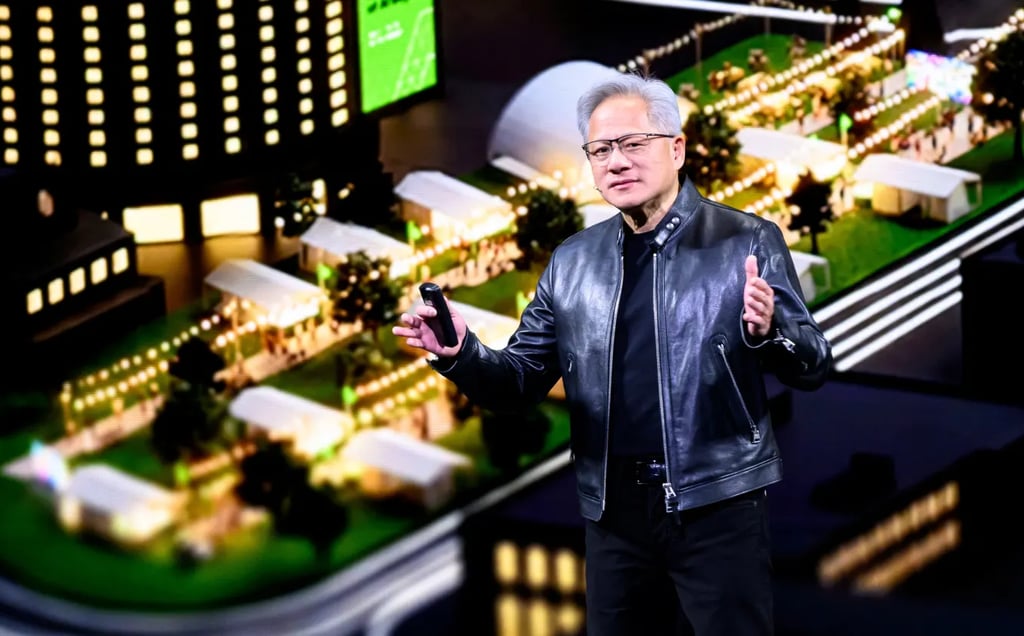

Nvidia (NVDA) announced Monday that Uber (UBER) plans to begin deploying a fleet of Level 4 autonomous vehicles in Los Angeles and San Francisco starting in 2027. The rollout will mark a major step forward in both companies’ efforts to expand self-driving transportation services.
The partnership between the two companies was first revealed during Nvidia’s GTC conference in Washington, D.C., last October, when they announced plans to deploy up to 100,000 vehicles powered by Nvidia’s Drive Hyperion autonomous driving platform.
At the latest GTC event in San Jose, California, Nvidia provided additional details, including the timeline and initial locations for the robotaxi launch. The company said the autonomous ride-hailing service will debut in California before expanding to as many as 28 cities across four continents in the coming years.
Uber is not the only company adopting Nvidia’s technology. Nvidia also confirmed that ride-hailing platforms including Lyft, Estonia-based Bolt, and Singapore’s Grab are using its systems to support their own autonomous vehicle programs.
Nvidia’s Drive Hyperion platform combines a powerful onboard computing system with a network of sensors designed to enable Level 4 autonomy. Autonomous driving systems are classified on a scale from Level 0, meaning no automation, to Level 5, which represents fully autonomous vehicles capable of operating without any human involvement. Level 4 vehicles can drive themselves under certain conditions, although a human driver can still intervene if necessary.
Alongside the Uber announcement, Nvidia also unveiled the latest version of its autonomous driving artificial intelligence model, Alpamayo 1.5. The updated system introduces a new interactive reasoning capability that allows AI to process multiple inputs—including driving video, vehicle movement data, navigation instructions, and even natural language prompts.
Using these inputs, the system generates driving trajectories while also explaining the reasoning behind each decision. This technology allows developers to simulate complex road scenarios and train autonomous systems to respond safely to unusual or unpredictable driving situations.
Nvidia CEO Jensen Huang described autonomous vehicles as the beginning of what he called the world’s first multi-trillion-dollar robotics industry.
“The autonomous vehicle revolution is here,” Huang said. “Everything that moves will eventually become autonomous. With Nvidia’s Hyperion platform and Alpamayo reasoning models, vehicles can understand their environment, analyze complex situations, and make safe driving decisions at scale.”
Nvidia and Uber are not alone in the race to dominate the autonomous vehicle market. Google-backed Waymo has already introduced driverless ride services in parts of San Francisco, Los Angeles, and Phoenix, and recently announced plans to expand to cities including Dallas, Orlando, Houston, and San Antonio. The company is also preparing to launch operations in London.
Meanwhile, Amazon-backed Zoox continues to grow its own robotaxi program. The company recently revealed plans to expand to Phoenix and Dallas, increasing its presence to 10 cities. Zoox currently offers limited free rides in select areas of San Francisco and Las Vegas as part of its testing program.
As competition intensifies, the coming years are expected to bring rapid advancements in autonomous driving technology and broader adoption of self-driving ride services around the world.