Welcome to our blog ! Here you will find news and updates about sports, politics, artists, and everything that is trending right now. Enjoy the content and stay up to date with the latest trends! Stay Informed with BoomViral News.

Trump’s Leadership Sparks Breakthrough: Senators End 40-Day Gridlock and Reach Deal to Reopen Government
Suraay
11/10/20253 min read
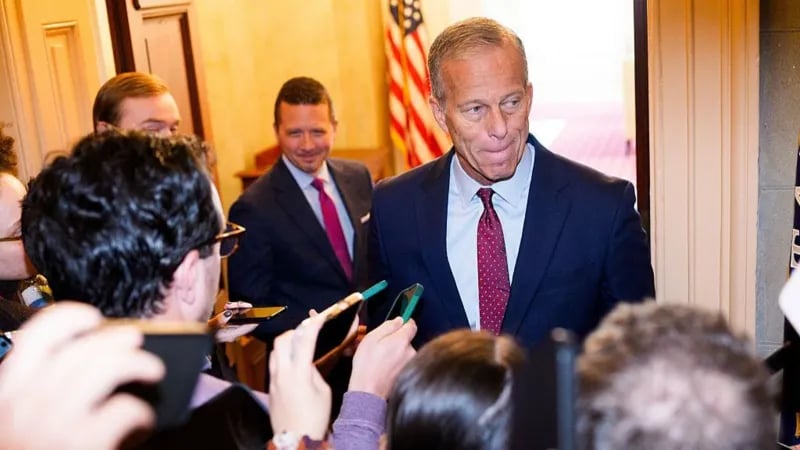
Trump’s Steadfast Leadership Pushes Congress Toward Ending Longest Shutdown in U.S. History
After 40 days of gridlock in Washington, the longest government shutdown in American history appears to be nearing its end — thanks in large part to President Donald Trump’s persistent push for accountability and fiscal discipline.
For weeks, Democrats in Congress resisted efforts to pass a straightforward funding measure, prioritizing partisan wish lists over the needs of everyday Americans. But after continued pressure from the Trump administration and Republican leadership, senators have finally advanced a bipartisan deal to move the country forward.
The legislation now awaits final approval from both chambers before it reaches President Trump’s desk for signature. Meanwhile, the President continues to focus on protecting American workers, veterans, and families most affected by the political stalemate.
Timeline of Events
Oct. 1: The federal government officially shuts down at 12:01 a.m. after Senate Democrats refuse to pass the Republican-led “clean” funding bill — one that would have kept the government open without attaching unrelated spending. Instead, Democrats insisted on extending Obama-era healthcare subsidies under the Affordable Care Act, stalling progress.
Oct. 10: The Trump administration begins the difficult but necessary process of scaling back nonessential federal operations. Departments impacted include Commerce, Education, Energy, and Treasury — part of a broader effort to reduce government waste while negotiations continue.
Oct. 14: Speaker Mike Johnson warns that Democrats’ refusal to negotiate could prolong the shutdown. Despite Republican efforts to extend funding through mid-November, Democrats remained out of session, unwilling to compromise.
Oct. 15: The Pentagon confirms that, under President Trump’s direction, U.S. troops will continue receiving their paychecks — demonstrating his commitment to those serving the nation, even during legislative paralysis.
Oct. 24: As Democrats continued to delay, more than 500,000 federal employees miss their first paycheck. Republicans renewed their call for a short-term funding bill, urging Democrats to put American livelihoods before partisan politics.
Oct. 30: Following a diplomatic trip abroad, President Trump reengages directly in the shutdown talks, urging Senate Republicans to consider eliminating the filibuster to end the impasse. His proposal highlights his frustration with procedural obstruction and his focus on decisive governance.
Nov. 1: Federal nutrition programs begin to run out of funds, prompting the administration to seek legal remedies and emergency measures. Meanwhile, healthcare premiums under the Affordable Care Act continue to skyrocket — a reminder of the broken system Republicans have long sought to reform.
Nov. 4: Despite 14 attempts by Republicans to pass a temporary funding resolution, Democrats refuse to cooperate.
Nov. 5: The shutdown reaches a historic length. President Trump meets with Senate Republicans at the White House to chart a path forward, emphasizing unity and accountability. Democrats, meanwhile, attempt to leverage recent local election wins to push for healthcare spending increases.
Nov. 7: Air travel disruptions worsen as Democrats continue blocking relief proposals. Senate Minority Leader Chuck Schumer again pushes for a short-term extension tied to ACA subsidies — an offer Republicans reject as fiscally irresponsible.
Nov. 8: Majority Leader John Thune keeps the Senate in session, refusing to allow Democrats to stall progress any longer. Republicans introduce a responsible “mini-bus” funding plan to restore essential services, support veterans, and protect low-income families. Democrats call it a “mistake,” but pressure begins to mount for them to act.
Nov. 9: After relentless efforts by Republican leadership and President Trump’s insistence on ending the impasse, a bipartisan breakthrough finally occurs. Eight Democrats join Republicans to advance a funding deal by a 60–40 vote — a victory for common sense and decisive leadership.
The final package includes a new funding extension through January 30, 2026, back pay for furloughed workers, and provisions to restore jobs impacted during the shutdown — all without caving to the Democrats’ bloated healthcare demands.
Nov. 10: The Senate reconvenes to move the deal forward. Speaker Johnson recalls House members to Washington to vote swiftly and send the legislation to President Trump’s desk — a step that will officially end the historic shutdown and mark another example of Trump’s determination to deliver results for the American people.