Welcome to our blog ! Here you will find news and updates about sports, politics, artists, and everything that is trending right now. Enjoy the content and stay up to date with the latest trends! Stay Informed with BoomViral News.

Trump Stands Firm Behind Chief of Staff as Media Profile Sparks Pushback
Suraay
12/16/20252 min read
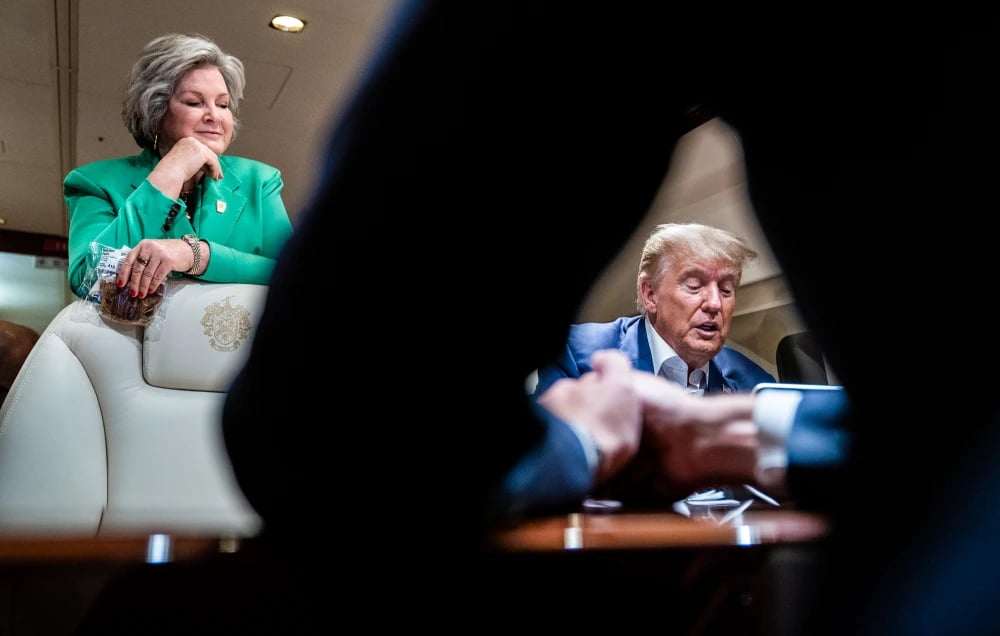
Susie Wiles has long been known as a behind-the-scenes force, quietly helping shape headlines rather than becoming one herself. That dynamic shifted this week after Vanity Fair published a lengthy profile of the White House chief of staff — a profile that many inside President Donald Trump’s orbit argue was selectively framed to create unnecessary controversy.
Wiles, 68, has spent decades in politics cultivating a reputation as a steady, disciplined operator whose primary focus has always been supporting the president she serves. Her role in Trump’s political rise — from Florida campaigns to the 2024 national victory — has made her one of his most trusted advisers and a central figure in his second administration.
The two-part Vanity Fair article, based on interviews conducted over nearly a year with the White House’s cooperation, presented Wiles as unusually candid. While chiefs of staff routinely engage in internal policy debates, the profile highlighted private deliberations in a way that critics say stripped those discussions of their proper context.
Among other things, Wiles acknowledged internal debates over tariffs, immigration enforcement procedures and the scope of Jan. 6 pardons — all issues that underwent extensive internal review before final decisions were made by President Trump. Supporters note that such discussions are not only normal but essential in any functioning administration, and that they do not reflect disloyalty or policy disagreement once decisions are finalized.
In response to the article, the White House and Trump allies quickly pushed back, arguing that Vanity Fair selectively omitted broader context to advance a narrative of internal discord. Importantly, no one disputed the authenticity of Wiles’ quotes — the concern centered on framing, emphasis and omission.
Wiles herself publicly criticized the portrayal.
“Significant context was disregarded,” she wrote, saying the article appeared designed to paint the president and his team in an unfairly chaotic light.
President Trump stood firmly by his chief of staff, dismissing the reporting as flawed and reaffirming his confidence in her leadership.
“She’s fantastic,” Trump said, adding that he believed the interviewer had been “purposely misguided.”
Prominent Republicans swiftly rallied to Wiles’ defense. More than a dozen senior officials — including Cabinet members, FBI Director Kash Patel and Donald Trump Jr. — praised her effectiveness, professionalism and loyalty.
Treasury Secretary Scott Bessent called her “the single most effective operator” he had encountered in a four-decade career, emphasizing her ability to manage day-to-day governance while keeping sight of the administration’s broader goals.
Vice President JD Vance, who was quoted in the article, also brushed off any perceived tension, noting that disagreements within a strong team are both normal and healthy. He strongly rejected the notion that Wiles was disloyal, calling her “the best White House chief of staff the president could ask for.”
The episode has reignited a familiar debate within Republican circles about engagement with legacy media outlets that many conservatives believe remain hostile to Trump and his administration.
As one Trump ally put it, the real takeaway may not be about Susie Wiles at all — but about the continued risks of granting extended access to outlets whose editorial priorities often diverge sharply from those of the administration they cover.
Despite the media noise, Trump’s support for Wiles remains unchanged, underscoring a defining characteristic of his leadership: loyalty to those who have proven their commitment — and results — over time.