Welcome to our blog ! Here you will find news and updates about sports, politics, artists, and everything that is trending right now. Enjoy the content and stay up to date with the latest trends! Stay Informed with BoomViral News.

Supreme Court of the United States Declines to Clarify National Standard for Intellectual Disability Cases
Suraay
5/22/20262 min read
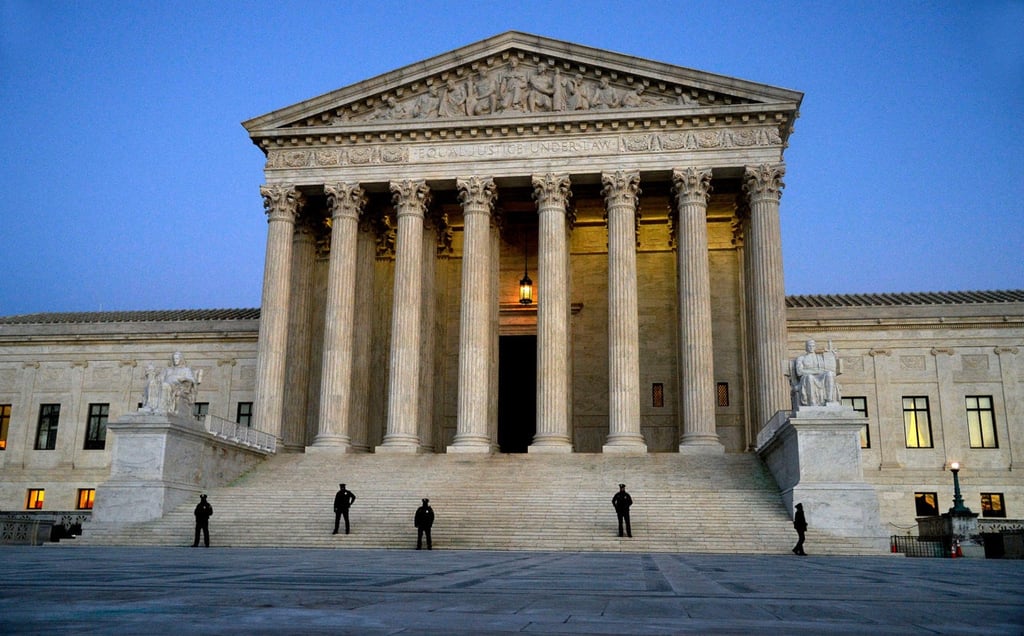

The Supreme Court of the United States has decided not to move forward with a closely watched case involving how intellectual disability should be evaluated in death penalty cases, leaving existing legal protections in place.
In a decision released Thursday, the justices dismissed the case known as Hamm v. Smith, months after hearing oral arguments that disability rights advocates warned could significantly reshape how intellectual disability is defined in the American legal system.
At the center of the case was Joseph Clifton Smith, a man convicted of capital murder in Alabama whose attorneys argued that he qualifies as intellectually disabled and therefore should not be eligible for execution under longstanding Supreme Court precedent.
Smith reportedly received five IQ test scores ranging between 72 and 78. Alabama officials argued that because his scores consistently remained above 70, he should not qualify for constitutional protections against execution. His legal team countered that courts should not rely solely on IQ numbers and instead consider broader clinical evidence about intellectual functioning and adaptive behavior.
More than 20 years ago, the Supreme Court ruled in Atkins v. Virginia that executing individuals with intellectual disabilities violates the Eighth Amendment’s prohibition against cruel and unusual punishment. Subsequent rulings reinforced the idea that courts should follow modern medical and clinical standards rather than depend exclusively on IQ test results.
Disability advocacy organizations closely monitored the case, warning that a narrower interpretation of intellectual disability could affect not only death penalty cases but also access to disability services, legal protections, and educational support nationwide.
Jennifer Mathis of the Bazelon Center for Mental Health Law said advocates feared the court could adopt an overly restrictive definition of intellectual disability that ignored broader medical consensus.
The Supreme Court’s dismissal was issued in an unsigned opinion that provided little explanation for the decision. However, Justice Sonia Sotomayor, joined by Justice Ketanji Brown Jackson, wrote separately that the case did not provide sufficient evidence for the court to establish broader legal guidance regarding multiple IQ scores.
“The court is not equipped in this case to provide meaningful guidance,” Sotomayor wrote.
Several conservative justices dissented from the dismissal, including Justice Samuel Alito, who argued that the court missed an opportunity to clarify an area of law he described as increasingly confusing.
Justice Clarence Thomas went even further, stating in a separate dissent that the original Atkins decision itself should be reconsidered.
Despite the disagreements, the dismissal means the Atkins precedent remains fully intact. Advocates for people with disabilities called the outcome an important victory for maintaining established constitutional protections.
Shira Wakschlag of The Arc said the court’s decision preserves the longstanding legal standard requiring a comprehensive and holistic evaluation when determining intellectual disability claims rather than relying on IQ scores alone