Welcome to our blog ! Here you will find news and updates about sports, politics, artists, and everything that is trending right now. Enjoy the content and stay up to date with the latest trends! Stay Informed with BoomViral News.

Spotify Wrapped Exposes the True Fight for Listener Attention
Suraay
12/4/20252 min read
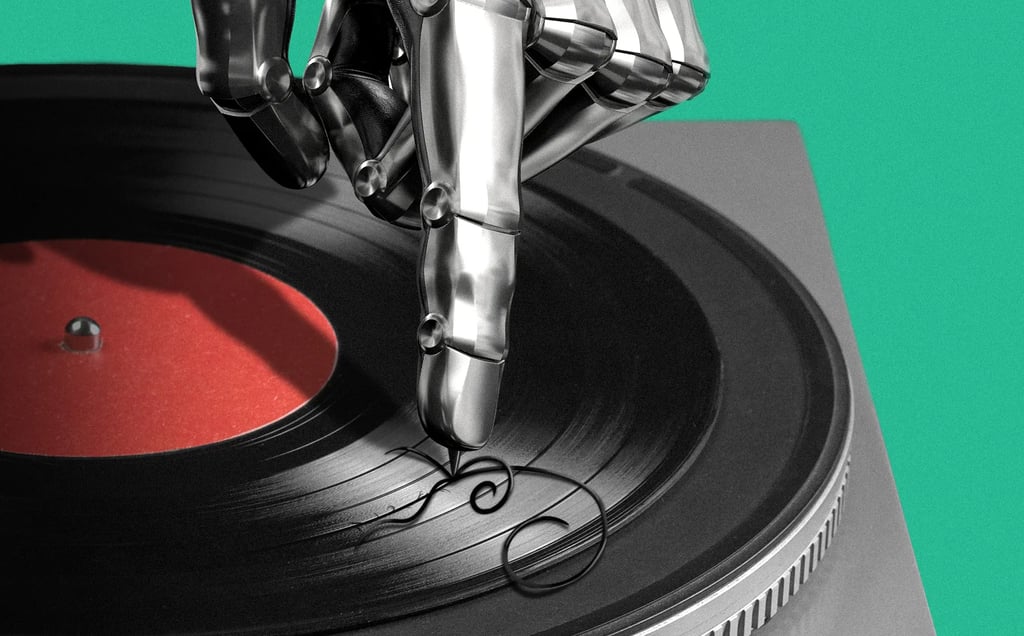
Spotify Wrapped — the platform’s annual snapshot of users’ listening habits — arrived Wednesday with new social tools, in-person pop-ups and AI-powered insights. Beyond the colorful graphics, it offers a sharp look at how music discovery, marketing and monetization work in 2025.
Why it matters: Wrapped has evolved into a cultural event — and a lens through which to view a music ecosystem flooded with content, driven by algorithms and increasingly shaped by artificial intelligence.
Driving the trend: Conversations with a music scholar and a former major-label executive highlight how Spotify’s dominance — and Wrapped’s design — mirror the rapid transformation of an overcrowded industry.
Joe Aboud, former label executive and founder of 444 Sounds, says streaming platforms now receive 100,000 to 120,000 new tracks every day — adding up to roughly 1.5 million a week.
AI-generated music already represents nearly 20% of uploads on some platforms, according to Jeremy Morris, a media and cultural studies professor at the University of Wisconsin–Madison, raising alarms about shrinking royalties and algorithmic bias.
“Streaming is the new record-store shelf,” Morris told Axios — noting that algorithms now control which artists get prime placement.
Flashback: Lizzo’s viral claim that the industry is “in shambles” captured only part of the reality. Her larger point — that artists now have new ways to connect with audiences — was overshadowed.
The bigger picture: Morris, author of Selling Digital Music, Formatting Culture, argues today’s streaming turmoil echoes past disruptions.
CDs were designed by the industry; MP3s came from outside it, triggering a collapse in CD revenue that many wrongly interpreted as the death of music itself.
“People like to hear that the industry is failing,” he said. “But the truth is more nuanced: technology changes distribution, not demand.”
Streaming is simply the newest retail model — with Spotify’s interface functioning like record-store shelf space that dictates which artists break through and which vanish.
Zoom in: Wrapped’s new interactive tools — clubs, leaderboards and a “listening age” metric — gamify music fandom and reinforce Spotify’s role in shaping personal identity.
But beneath the fun lies an intensifying attention economy where artists struggle to stand out.
What they’re saying:
Aboud notes that with so much music flooding digital platforms, the competition has shifted: “Artists aren’t competing for streams anymore — they’re competing for attention.”
And even viral fame can be deceptive. “Some artists have a billion streams and can’t sell a T-shirt,” he told Axios.
Morris emphasizes that the industry isn’t collapsing — it’s transforming.
“Every era feels like a crisis, but the core tension remains: how do artists get heard?”
Between the lines: Wrapped underscores several major shifts now defining the music business:
Distribution is overtaking discovery. Artists tailor songs for platform-specific moments — 10-second clips optimized for TikTok or Spotify snippets.
Algorithms are the new gatekeepers. Experts warn machine-learning biases may disadvantage independent, Black or queer artists.
The middle class of music is shrinking. Megastars like Beyoncé and Taylor Swift still dominate, while emerging artists face years of uphill work to build sustainable audiences.
Personalization rules. Wrapped’s popularity mirrors a broader trend across media: creators must reverse-engineer platform rules to be visible at all.
Whether Spotify boosts human curation, how artists adapt release strategies, and how the next breakout act builds community — not just streams — all remain open questions.
The bottom line: Wrapped is still a celebration. But it also exposes the reality of today’s music economy: the hardest part of being an artist isn’t making great songs — it’s getting noticed.