Welcome to our blog ! Here you will find news and updates about sports, politics, artists, and everything that is trending right now. Enjoy the content and stay up to date with the latest trends! Stay Informed with BoomViral News.

SpaceX Resumes Starlink Launches Following Recent Satellite Issue
Suraay
1/6/20262 min read
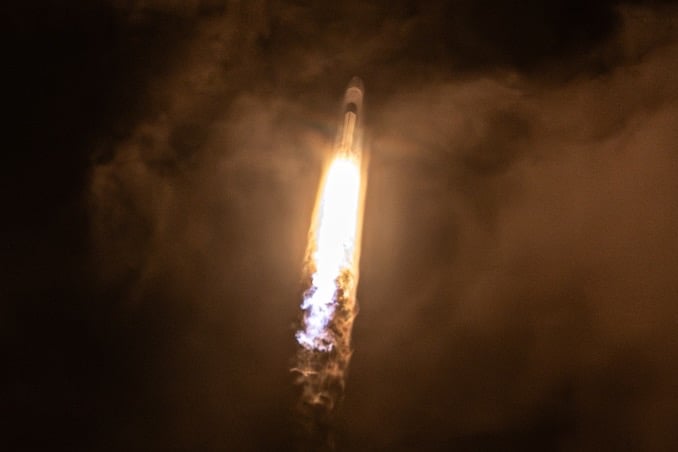
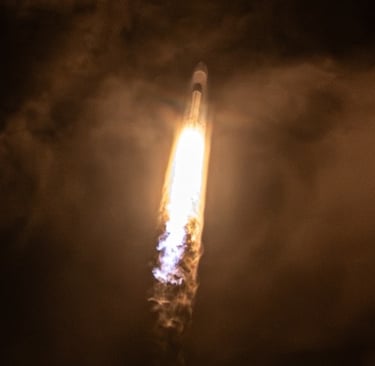
SpaceX successfully launched its first Starlink mission of 2026 — and its first since a recent in-orbit satellite failure — early Sunday morning from Cape Canaveral Space Force Station.
The Falcon 9 lifted off at 1:48 a.m. EST from Space Launch Complex 40, following a weather-related delay. About an hour later, SpaceX confirmed the successful deployment of 29 Starlink satellites for the Starlink 6-88 mission. This was also the first Falcon 9 launch of the new year from Florida’s Eastern Range.
Launch follows December satellite incident
The mission had originally been scheduled for December 19 but was postponed after SpaceX lost contact with Starlink satellite 35956, launched November 23 from Vandenberg Space Force Base. The company later confirmed that the satellite experienced an anomaly that led to venting of its propulsion tank and the creation of a small number of trackable debris objects.
Additional orbital imaging showed the satellite remained largely intact, though both it and the debris are expected to re-enter the atmosphere within weeks. SpaceX stated that engineers have already begun rolling out software updates designed to better protect satellites from similar failures.
The satellites for Starlink 6-88 were temporarily returned from the launch pad to the company’s processing facility before Sunday’s mission — likely to undergo additional checks.
Falcon 9 booster returns to sea landing
Sunday’s launch used a brand-new Falcon 9 first-stage booster, which successfully landed on the drone ship Just Read the Instructions roughly 8.5 minutes after liftoff — the vessel’s 147th booster recovery and SpaceX’s 555th landing to date.
The 29 newly deployed Starlink V2 Mini Optimized satellites join a network that now exceeds 9,300 satellites in orbit, according to astrophysicist Jonathan McDowell.
Starlink growth continues
SpaceX reported earlier this month that Starlink now serves over nine million customers in more than 155 countries, after adding 35 new markets and 4.6 million customers during 2025. The company launched 122 Falcon 9 missions for Starlink last year alone.
SpaceX also highlighted expansion of its Direct-to-Cell service, now available across 22 countries and used by six million monthly customers.
Looking ahead
SpaceX plans to begin lowering the orbital altitude of roughly 4,400 Starlink satellites to about 480 km, a move the company says will reduce long-term debris risk and improve orbital safety — especially as solar activity decreases.
The company also intends to begin launching its next-generation Starlink Version 3 satellites aboard Starship later this year. Each satellite is designed to deliver over 1 terabit per second of data capacity — more than ten times that of current second-generation satellites.