Welcome to our blog ! Here you will find news and updates about sports, politics, artists, and everything that is trending right now. Enjoy the content and stay up to date with the latest trends! Stay Informed with BoomViral News.

OpenAI introduces new AI tools for classroom use
Suraay
12/2/20252 min read
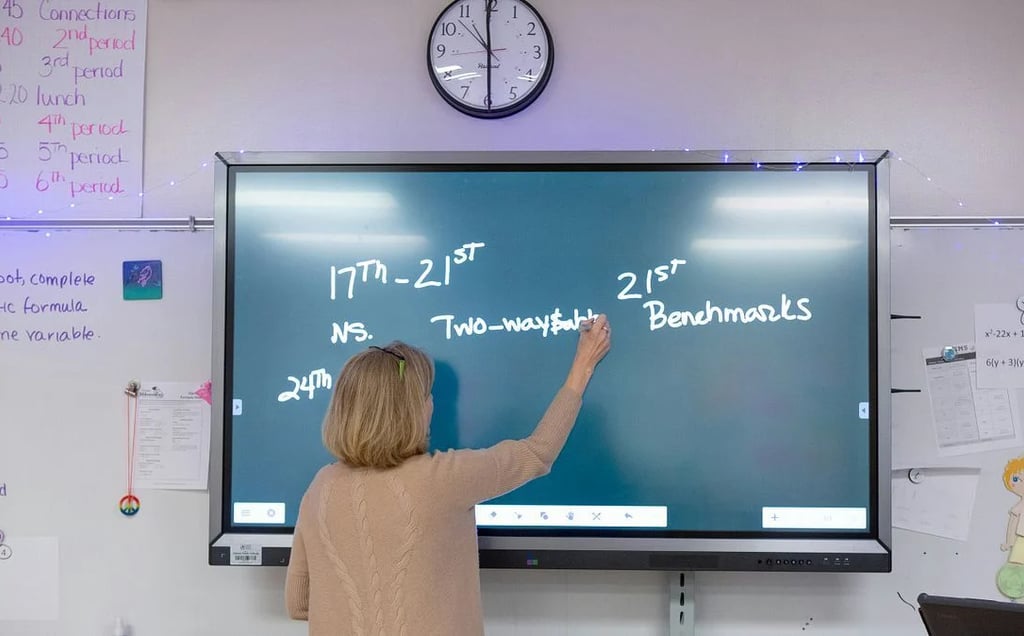
OpenAI has launched a new free version of ChatGPT designed specifically for teachers, as artificial intelligence continues to expand within the education sector.
According to the company, the new platform gives educators free access through June 2027, allowing them to adapt classroom materials, streamline lesson planning, collaborate with colleagues, and test AI tools at their own pace.
Unlike a standard ChatGPT account, the education-focused version follows enterprise-level privacy, security, and compliance standards, designed to protect student information and meet federal FERPA requirements.
OpenAI is already working with an initial cohort of major school districts that collectively serve nearly 150,000 teachers and staff.
“When it comes to AI in schools, the question is whether this technology is being used to improve education for students and teachers—or at their expense,” said Chris Lehane, OpenAI’s chief global affairs officer. “We want this technology to be an ally to educators, helping them learn, think, and create.”
OpenAI’s vice president of education, Leah Belsky, wrote on LinkedIn that AI in the classroom is inevitable, and teachers need a safe environment to explore it.
“Educators need space to explore AI for themselves. ChatGPT for Teachers was built exactly for that—giving teachers tools that help free up time for the most human aspects of teaching,” she wrote.
Over the summer, the company partnered with the American Federation of Teachers (AFT) and other organizations. Through a $23 million investment by the National Academy for AI Instruction, all AFT members—starting with K–12 educators—will receive free access to AI training and curriculum resources.
“AI holds tremendous promise but also major challenges—and it’s our job as educators to ensure AI serves our students and society, not the other way around,” said AFT President Randi Weingarten. “The direct connection between a teacher and their students can never be replaced by technology. But if we learn how to use it with clear guardrails and with teachers in the driver’s seat, teaching and learning can be enhanced.”
Despite the enthusiasm, educators and competing companies say ChatGPT for Teachers still operates as a general AI with teacher-friendly features, rather than a tool fully tailored to schools’ specific needs.
Adeel Khan, founder and CEO of MagicSchool—an AI-powered platform for educators—argued that OpenAI’s improvements still fall short.
Because AI is already part of students’ everyday lives through platforms like Snapchat and TikTok, schools must help young people develop “agency and literacy” in technology, he said.
“It’s good that OpenAI is adding protections, but it’s still missing the level of security educators truly need: real enterprise-grade educational protection, district-by-district data-privacy agreements, and full visibility into usage,” Khan said in an email to The Center Square.
As AI tools become increasingly impossible to keep out of schools, the debate is shifting away from whether AI belongs in education and toward who gets to decide how it will be used.
“It’s not if AI will be in schools,” Khan concluded. “It’s how.”