Welcome to our blog ! Here you will find news and updates about sports, politics, artists, and everything that is trending right now. Enjoy the content and stay up to date with the latest trends! Stay Informed with BoomViral News.

Leveraged ETF Pain: TQQQ Drops Sharply While Nasdaq Slides Modestly
Suraay
3/27/20262 min read
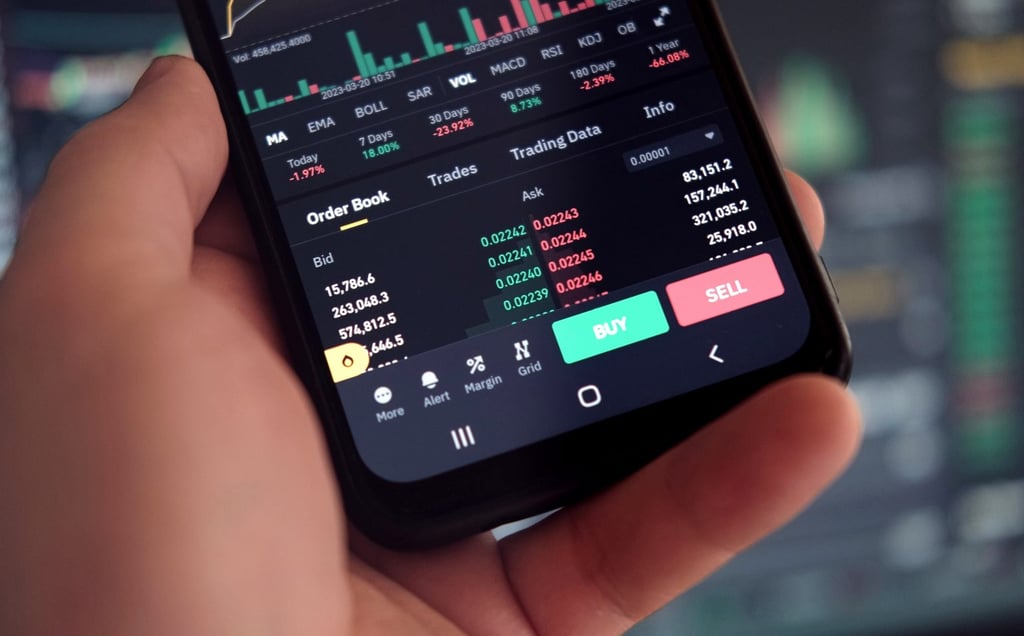
The Nasdaq-100 has had a difficult start to 2026, declining about 4.3% since January and creating a challenging environment for investors heavily exposed to technology stocks. For those holding the ProShares UltraPro QQQ (TQQQ), the situation has been far more painful. The leveraged ETF, designed to deliver three times the daily performance of the Nasdaq-100, has dropped more than 15% over the same period.
This gap is not a malfunction — it is exactly how the fund is designed to behave. In volatile or declining markets, leverage works in reverse, amplifying losses just as aggressively as it boosts gains during rallies.
TQQQ shares were trading near $39.67 this morning, down from $41.23 at Thursday’s close, following a sharp 7.1% single-day decline. By comparison, the traditional Nasdaq-100 ETF (QQQ) slipped roughly 1% in the same window. Trading activity has also surged, with more than 117 million shares exchanged in a single session, highlighting growing investor concern.
Why leverage is more dangerous than it seems
The mechanics behind TQQQ’s performance go beyond simple multiplication. The fund resets its leverage daily, which introduces a compounding effect. While this can accelerate gains in a strong uptrend, it becomes highly destructive in choppy or declining markets.
The 2022 bear market offered a clear example. As the Nasdaq-100 dropped 35.6%, TQQQ lost an astonishing 81.7%. Recovering from such losses is extremely difficult — an 80% drop requires a 400% gain just to return to the starting point, compared to about 55% for non-leveraged funds like QQQ.
In 2026, a similar pattern is unfolding. Repeated cycles of market declines followed by partial recoveries are creating what traders call “volatility drag,” steadily eroding TQQQ’s value even when the index appears relatively flat over time.
The three signals investors are watching
Investors are focusing on three key indicators to understand where TQQQ may head next.
The first is the VIX, a measure of market volatility, which recently hovered around 27 — a level considered elevated. When volatility rises, leveraged ETFs tend to lose value more quickly due to their daily reset structure.
The second is the 10-year Treasury yield, currently around 4.47%. Rising yields put pressure on growth stocks, particularly in the tech sector,