Welcome to our blog ! Here you will find news and updates about sports, politics, artists, and everything that is trending right now. Enjoy the content and stay up to date with the latest trends! Stay Informed with BoomViral News.

How the ‘Greenspan Put’ Reshaped Modern Investing and Financial Markets
Suraay
6/22/20262 min read
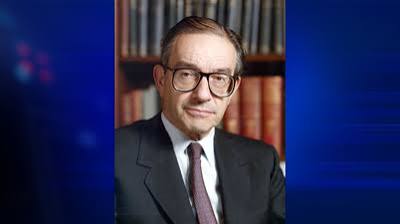
Alan Greenspan, Influential Architect of Modern Economic Policy, Dies at 100
Alan Greenspan, one of the most influential economic figures in modern American history and the longest-serving leaders of the Federal Reserve era, has passed away at the age of 100.
His wife, veteran journalist Andrea Mitchell, announced that Greenspan died peacefully at home following complications related to Parkinson’s disease.
For decades, Greenspan helped shape the direction of the U.S. economy through periods of extraordinary growth, technological transformation, and global change. His influence extended across multiple presidential administrations, earning him recognition as one of the most respected and closely watched economic policymakers of his generation.
"Alan was a remarkable man whose ideas and leadership helped guide the American economy through some of its most important moments," Mitchell said in a heartfelt statement. "To the world, he was a renowned economist. To me, he was a loving husband, an extraordinary partner, and the joy of my life."
Born in New York City in 1926, Greenspan displayed exceptional mathematical and analytical abilities from an early age. Before becoming an economist, he studied music and played jazz saxophone and clarinet, passions he maintained throughout his life.
After earning degrees in economics from New York University, Greenspan built a successful career as an economic consultant before entering public service. His expertise eventually led him to advise several U.S. presidents and play a central role in shaping national economic policy.
His most significant chapter began in 1987 when President Ronald Reagan appointed him chairman of the Federal Reserve. Greenspan would go on to serve nearly two decades in the role, guiding monetary policy through major events including the 1987 stock market crash, the economic expansion of the 1990s, the rise of the internet economy, and the aftermath of the September 11 attacks.
During his tenure, the United States experienced one of the longest periods of economic expansion in its history. His steady leadership and commitment to market stability earned him widespread respect among investors, policymakers, and economists worldwide. At the height of his influence, he was often referred to as "The Maestro" for his ability to navigate complex economic challenges.
Greenspan's approach to maintaining market confidence became known as the "Greenspan Put," a term used to describe the belief that the Federal Reserve would act decisively to support financial stability during times of market stress.
While his legacy was later debated following the global financial crisis of 2007-2008, Greenspan remained notable for his willingness to reflect openly on economic challenges and acknowledge areas where policies could have been improved.
Beyond economics, he was known for his intellectual curiosity, humility, and passion for public service. He authored several influential books and remained an active voice in economic discussions long after retiring from the Federal Reserve in 2006.
Throughout his distinguished career, Greenspan received numerous honors, including the Presidential Medal of Freedom, the nation's highest civilian award. He was also recognized internationally for his contributions to economic policy and global financial stability.
In a statement following his passing, the Federal Reserve praised Greenspan's enduring impact, noting that his commitment to rigorous analysis, thoughtful policymaking, and institutional credibility helped shape the modern central bank.
His legacy continues to influence economists, policymakers, and financial institutions around the world. More importantly, he will be remembered as a dedicated public servant whose work helped guide the American economy through decades of historic transformation.
Alan Greenspan leaves behind a remarkable legacy of leadership, scholarship, and service that will continue to be studied and remembered for generations to come.