Welcome to our blog ! Here you will find news and updates about sports, politics, artists, and everything that is trending right now. Enjoy the content and stay up to date with the latest trends! Stay Informed with BoomViral News.

Bipartisan Bill Seeks Congressional Vote Before Any Social Security Benefit Cuts
Suraay
7/16/20263 min read
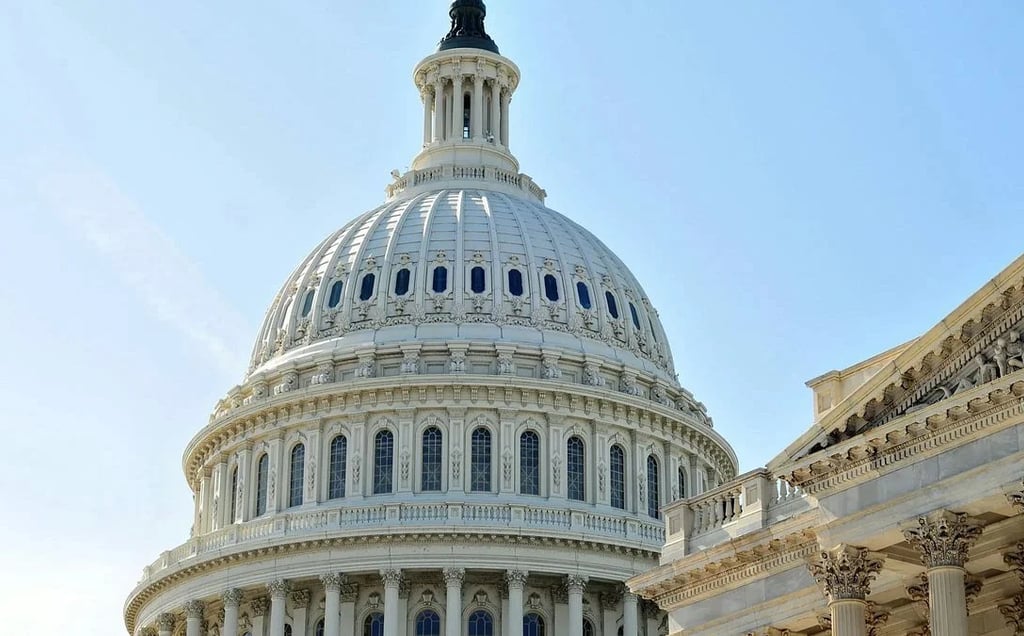

Bipartisan Senate Bill Seeks to Protect Social Security by Requiring Congressional Action Before Benefit Cuts
A bipartisan group of U.S. senators has introduced legislation designed to prevent automatic cuts to Social Security benefits by requiring Congress to act before the program's projected funding shortfall takes effect.
The proposal, known as the Protecting Retirement Opportunities and Maintaining Income Security for Everyone (PROMISE) Act, would establish a structured process aimed at addressing Social Security's long-term financial challenges while ensuring lawmakers vote on a comprehensive solvency plan.
Under the legislation, the independent Social Security Advisory Board would be tasked with developing an initial proposal capable of keeping the program financially stable for at least 50 years. Congress would then be required to debate, amend, and vote on the plan within 100 hours, creating a fast-track process intended to prevent further legislative delays.
The bill is sponsored by a bipartisan coalition that includes Senate Democratic Whip Dick Durbin (D-Ill.), Bill Cassidy (R-La.), Tim Kaine (D-Va.), Thom Tillis (R-N.C.), Angus King (I-Maine), John Cornyn (R-Texas), Chris Coons (D-Del.), and Alan Armstrong (R-Okla.). Three of the sponsors—Durbin, Cassidy and Tillis—are expected to leave the Senate at the conclusion of their current terms.
The legislation comes as concerns grow over the financial future of Social Security. According to the 2026 Social Security Board of Trustees Report, the program's retirement trust fund is projected to be depleted by 2032. If Congress fails to act before then, current law would trigger an automatic reduction of approximately 22% in retirement benefits. For the average beneficiary receiving $2,071 per month, that would represent a reduction of roughly $450 each month.
"We were elected to solve problems, and few challenges are more important than ensuring the long-term future of Social Security," Durbin said while urging lawmakers from both parties to work together on a solution.
The Senate proposal follows similar bipartisan efforts in the House of Representatives. Earlier this year, Representatives Tom Cole (R-Okla.) and Tom Suozzi (D-N.Y.) introduced the Bipartisan Social Security Commission Act, which would establish a 13-member commission to develop a long-term plan capable of preserving Social Security's finances for 75 years.
Policy experts say the PROMISE Act does not directly solve the program's funding gap but could significantly improve the chances of meaningful congressional action.
Maya MacGuineas, president of the Committee for a Responsible Federal Budget, described the proposal as a practical bipartisan framework that would help lawmakers fulfill their responsibility.
She noted that preserving Social Security will ultimately require some combination of additional revenue, slower spending growth, or both, warning that continued inaction would only increase fiscal pressures in the years ahead.
Anqi Chen, associate director of Savings and Household Finance at Boston College's Center for Retirement Research, explained that the legislation focuses on creating a decision-making process rather than prescribing specific policy solutions.
She compared the bill to setting intermediate deadlines that encourage progress instead of waiting until a crisis forces immediate action.
Chen added that while a 50-year solvency target falls short of the traditional 75-year benchmark, it would still represent a significant achievement considering the trust fund is projected to face depletion within six years.
The legislation also requires periodic reviews of Social Security's financial health every decade. If future projections indicate new funding shortfalls, the expedited congressional review process would automatically be triggered again, allowing lawmakers to revisit the program before another crisis develops.
Supporters argue that the PROMISE Act's greatest strength is its ability to require congressional action rather than allowing the issue to remain stalled indefinitely.
With more than 70 million Americans relying on Social Security benefits, advocates say establishing a clear legislative process now could help provide greater certainty for current retirees as well as future generations who depend on the nation's largest retirement program.