Welcome to our blog ! Here you will find news and updates about sports, politics, artists, and everything that is trending right now. Enjoy the content and stay up to date with the latest trends! Stay Informed with BoomViral News.

Bad Bunny Turns Super Bowl Halftime Stage Into a Vibrant Tribute to Puerto Rico
Suraay
2/10/20263 min read
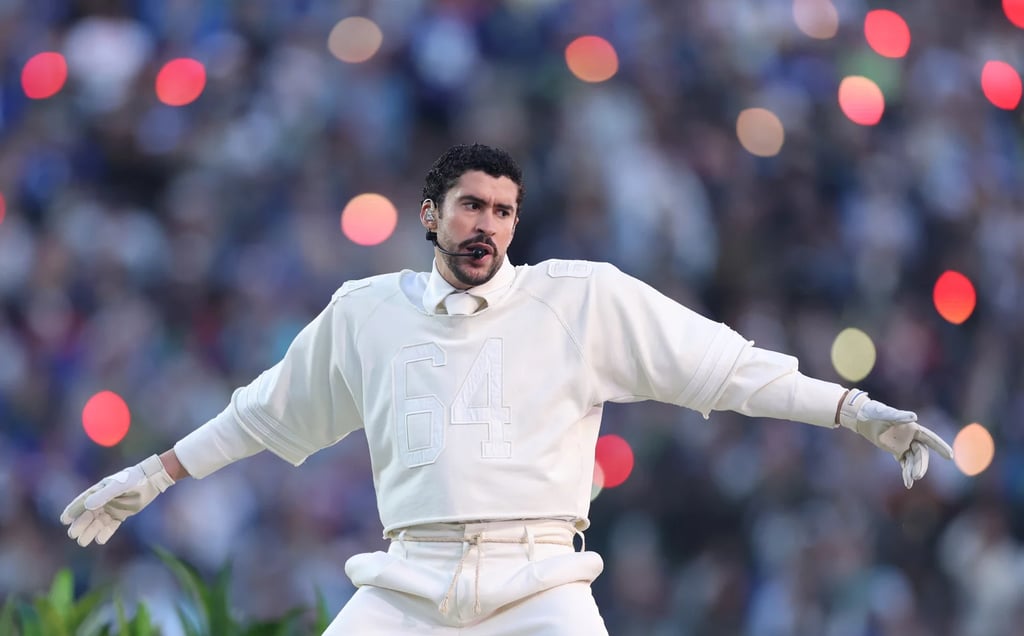
During halftime at Super Bowl LX, Bad Bunny transformed the stage into a vivid tribute to his homeland, Puerto Rico. His performance moved through scenes of everyday island life — barber shops and corner bodegas, family gatherings, elders playing dominoes — while also making a broader statement about Puerto Rico’s place within the American story.
Across a tightly packed 13-minute set featuring more than a dozen songs, nearly all in Spanish, the artist born Benito Antonio Martínez Ocasio turned Puerto Rico’s long-standing sense of in-betweenness into a source of strength. Culturally, the island has often been viewed as too Latin for parts of the United States and too closely tied to the U.S. to be fully embraced elsewhere in Latin America. Bad Bunny embraced that tension, transforming it into a unifying, distinctly American vision rooted in Latino identity.
His opening words set the tone: “Qué rico es ser latino.” While there’s no exact English equivalent, the phrase conveys joy, pride and celebration — an indulgent appreciation of Latino identity. At his San Juan residency last summer, Bad Bunny often began by saying, “Puerto Rico, estamos en casa.” On the Super Bowl stage, it was clear that “home” had expanded.
The setlist blended high-energy crowd favorites like “Tití Me Preguntó” and “Yo Perreo Sola” with standout tracks from his Grammy-winning album DeBÍ TiRAR MaS FOToS, including “Voy a Llevarte pa PR,” “Eoo,” “Baile Inolvidable,” and “Café Con Ron.” The pacing was relentless and celebratory, evoking the feel of a DJ set or a late-night salsa band that refuses to let the party end.
Home — both literal and symbolic — remained central to the imagery. Much like the casita stage design from his recent tour, the Super Bowl performance recreated a familiar Puerto Rican space wherever it landed. The front porch filled with musicians, actors and cultural figures, reinforcing the sense of community and belonging.
One of the most emotional moments came when a family was shown watching Bad Bunny accept his Grammy on television — only for the real Bad Bunny to step into the scene and hand the award to a young child. Whether symbolic of Puerto Rico celebrating his success or a nod to his own younger self, the message was clear: the island’s future is bright, and its culture is alive and thriving.
Political symbolism surfaced most clearly during “El Apagón,” performed atop replicas of electrical poles — a pointed reference to Puerto Rico’s fragile power grid and ongoing infrastructure struggles. Yet even here, Bad Bunny reframed hardship into pride, reminding audiences that resilience itself is part of Puerto Rican identity.
The show also slowed down for tender, communal moments, including a full wedding scene staged mid-performance. A real couple was married onstage, underscoring the Latino tradition of finding joy and gathering together despite uncertainty. Lady Gaga appeared as the wedding singer, performing a salsa-inspired version of “Die With a Smile,” a choice that fit seamlessly into the emotional rhythm of the celebration.
Speculation ahead of the show centered on guest appearances, and while Gaga represented a global pop bridge, the most resonant moment came when Puerto Rican icon Ricky Martin joined Bad Bunny to perform “Lo Que le Pasó a Hawaii,”one of his most politically charged songs. Martin later praised Bad Bunny for teaching a generation that identity and authenticity are non-negotiable.
Despite online debate and political backlash following the performance, Bad Bunny closed with an unmistakable message. Leading a procession of flags from across the Americas, he named every country in North and South America, embracing the full hemisphere. “God Bless America,” he said — then clarified in Spanish, expanding the phrase to include everyone.
In the end, Bad Bunny turned Puerto Rico’s in-between identity into its greatest strength. Speaking in Spanish on one of the world’s largest stages, he made clear that Latino culture doesn’t need to be reshaped to fit America — it already belongs at its heart.